How to Choose a Leptospira Test Kit for Routine Laboratory Testing
Whole blood and urine create different starting points for a routine leptospirosis test. Their inclusion on a laboratory menu establishes two specimen routes, each needing an appropriate connection to the molecular examination.
Reagent selection therefore involves more than recognizing the organism’s name on a carton. The practical question is whether an accepted specimen can proceed through preparation, DNA detection and review under conditions that the service can sustain during ordinary work.
Define the Specimen Routes the Routine Service Will Accept
A whole-blood submission contains cellular and liquid components, whereas urine has a different biological composition. That difference matters before amplification begins, because preparation works on the material actually received. A laboratory cannot infer identical handling requirements from the fact that both specimens may be investigated for the same bacterial target.
A blood-derived label is not sufficient identification for this purpose. Serum or plasma cannot acquire whole-blood eligibility merely through a common collection origin. The specimen category needs to match the method claim before preparation resources are assigned, leaving any unsupported material for separate assessment.
The intended examination also needs a defined analytical object. Leptospira DNA provides a molecular target for a leptospirosis test; detecting antibodies would examine a different biological component. Method names therefore belong beside specimen descriptions during selection, preventing a familiar disease label from obscuring what the proposed examination measures.
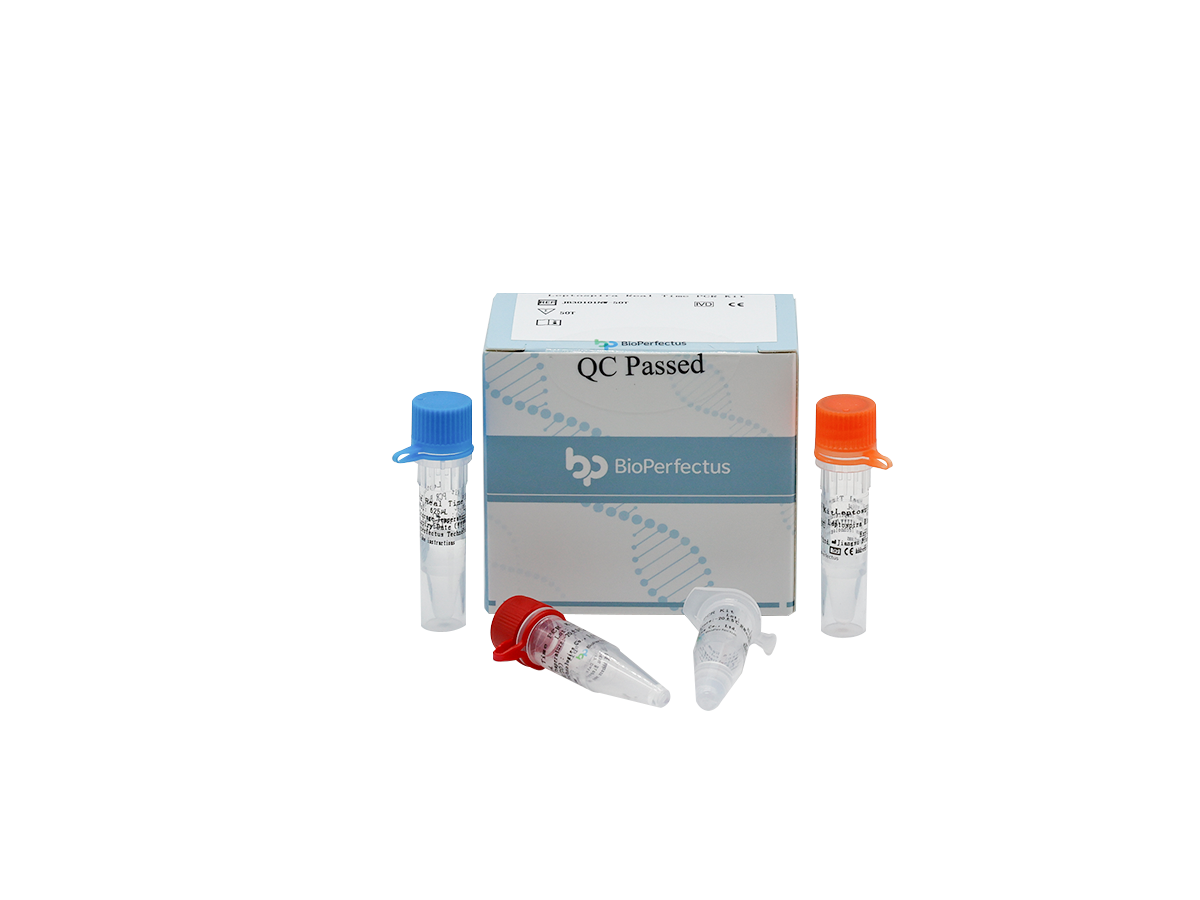
For human whole blood and urine, the BioPerfectus Leptospira Real-Time PCR Kit provides qualitative detection of Leptospira DNA. Its qualitative DNA application gives the laboratory a concrete scope to compare with incoming requests. Clinical or reference-laboratory use remains attached to those human materials rather than extending automatically to animal samples or environmental surveillance.
Assessment of a Leptospira test kit can retain a separate route for each accepted matrix. The collection description, preparation method and receiving reaction form the relevant connections. Inclusion of both materials does not rank their diagnostic value at particular stages of illness or establish a universal schedule for collecting them.
Follow DNA into the Reaction and Examine the Process Evidence
Preparation separates the required molecular material from its surrounding matrix and delivers an input suitable for amplification. Whole-blood and urine extracts can differ in DNA recovery and reaction compatibility despite the shared target. The recovered liquid therefore needs assessment through its intended analytical use, rather than through its visible volume alone.
Real-time PCR amplifies selected DNA sequences and observes an associated fluorescent signal during the reaction. The assay’s recognition and interpretation determine which response supports the target finding. Such a measurement concerns bacterial genetic material in the tested preparation; it does not become an antibody result or a count of viable organisms simply because the investigation concerns an infectious disease.
An internal control supports analytical process monitoring in the BioPerfectus assay. Control observations enter review under the method’s instructions, including the response required when the procedure needs investigation. An absent target observation cannot settle that procedural question, and merely including a control cannot establish that every possible specimen-handling problem has been excluded.
Liquid transfer supplies another concrete assessment point for a Leptospira test kit. The specified input is 5 µL, referring to the aliquot entering testing. That small analytical quantity is distinct from the original specimen collected and from the total preparation recovered; dispensing materials and the applicable transfer procedure must address the quantity actually required at that operation.
Establish What Routine Use Requires Around the Analytical Run
Scheduled testing needs suitable reagents, prepared material and an instrument configuration available together. A compatible instrument family still leaves the laboratory with a particular programme, reaction format and detection arrangement to establish. Reviewing that combination identifies the actual examination being introduced, rather than treating an available thermal cycler as sufficient evidence of method suitability.
The BioPerfectus kit is compatible with multiple mainstream PCR instruments and has a stated testing time of 62 minutes. That interval belongs to the analytical testing procedure. Receipt, preparation and professional review occupy additional time, so the figure alone cannot specify when a submitted specimen will become a released report.
Reagent storage belongs within the routine operating arrangement, alongside access to the materials needed for preparation and reaction assembly. The product’s storage and shelf-life instructions govern reagent suitability when testing occurs. Those instructions cannot be reused as transport or holding conditions for human specimens, which remain subject to their own applicable procedures.
Before introducing a Leptospira test kit, a laboratory can examine representative accepted materials through its intended method. Expected target findings, relevant controls and documented responses to unresolved observations give the assessment a practical endpoint. The resulting evidence concerns the combination actually examined, without implying that every proposed preparation method has already been demonstrated suitable.
Changes during routine use need a traceable scope. Replacing an extraction reagent, altering a reaction programme or accepting a different specimen category raises different questions. A record of the established arrangement makes the affected evidence identifiable when a change is proposed, without assuming unchanged packaging means an unchanged method.
A routine leptospirosis test becomes available through these connected conditions, rather than through a single favourable specification. Whole blood and urine retain their respective preparation requirements as they enter the same defined DNA examination. Day-to-day readiness rests on maintaining those specimen routes together with an executable reaction, interpretable process evidence and reagents suitable for use.